
When standard software stops short,
we build the missing layer.
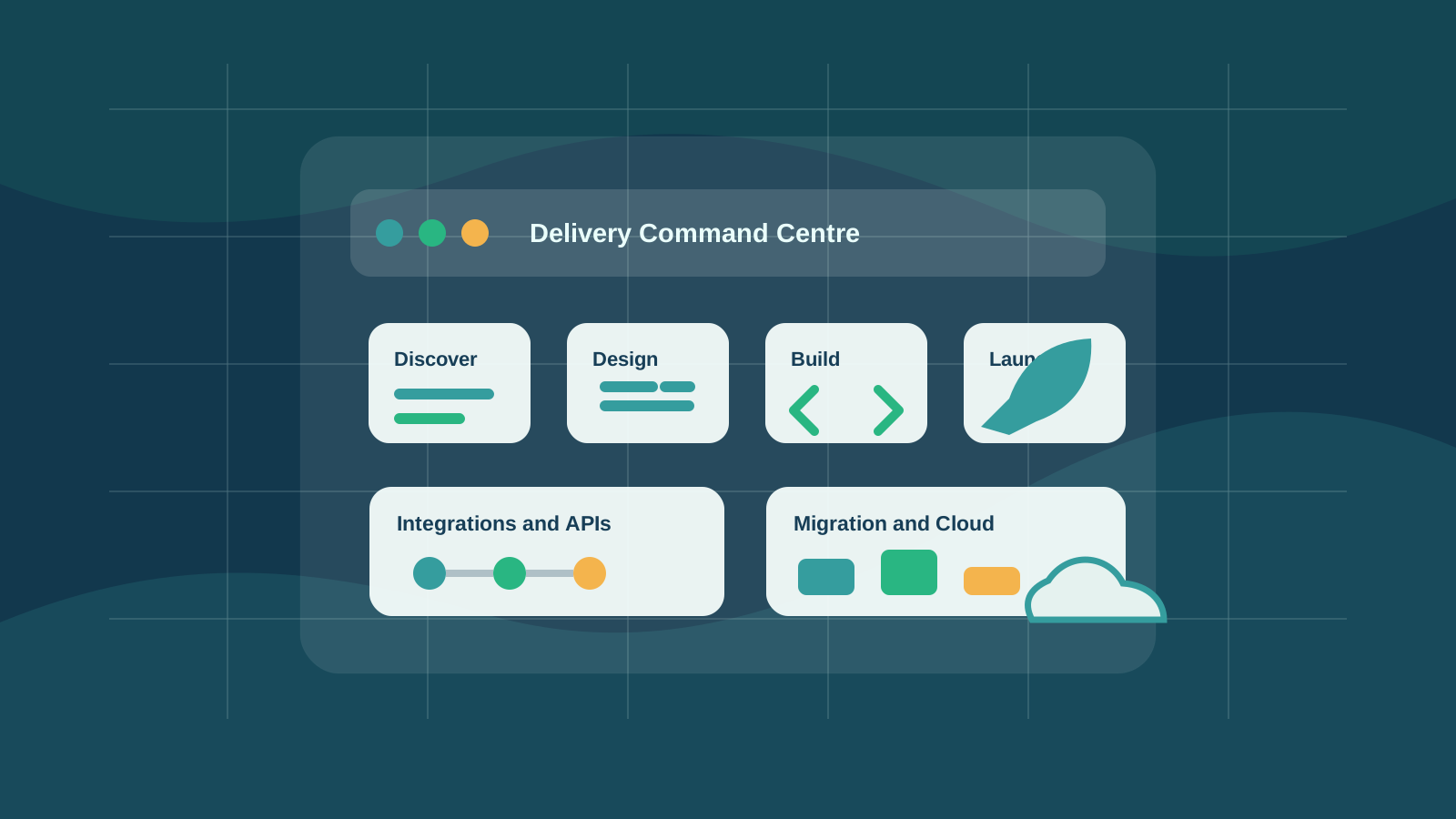
Custom web and mobile products, APIs, integrations, data migration, infrastructure, automation and technical delivery for systems with real users, operational dependencies and long-term ownership.
Product delivery
Integrations
Migration
Infrastructure
Training
Product delivery
Web, mobile and back-office systems
Connectivity
APIs, integrations and automation
Modernisation
Data migration and system recovery
Operations
Deployment, observability and support
Bring the real problem,
not a preselected solution.
The right answer may be a new application, a smaller integration, a migration, an automated workflow or recovery of an existing system. Pintop starts with the operational outcome before deciding what should be built.
Understand where the process breaks
Review the users, steps, decisions, data, systems, controls, reporting, risks and recurring work involved before defining a technical response.
Design around the intended result
Scope is shaped by what needs to improve: faster processing, fewer errors, clearer visibility, safer controls, better customer access or reduced dependence on fragile manual work.
What Pintop
builds and improves.
Each engagement is scoped around the product, workflow and operational responsibilities involved rather than a fixed package of technologies.
Web applications
Customer portals, admin systems, SaaS products, workflow tools and secure self-service experiences.
Mobile products
Mobile applications connected to dependable backend services, notifications, analytics and release processes.
APIs and integrations
Internal services, partner APIs, webhooks, queues, reconciliation, monitoring and integration documentation.
Data migration
Extraction, cleaning, mapping, rehearsal, validation, balancing and controlled cutover.
Operational dashboards
Reporting and investigation interfaces tied to meaningful business activity and decision-making.
Cloud and DevOps
Environments, containers, pipelines, monitoring, backup, recovery and operational handover.
Workflow automation
Approvals, scheduled work, notifications, documents, reconciliation and repetitive operational processes.
System recovery
Technical review and improvement of systems that are unstable, incomplete, slow or difficult to maintain.
A visible path from discovery
to operation.
Delivery is broken into reviewable stages so decisions, risks and working software remain visible throughout the engagement.
01
Understand
Map users, workflows, business rules, systems, data, risks, constraints and the definition of success.
02
Design
Produce user flows, interface direction, architecture, data structure, integration approach and delivery milestones.
03
Build in increments
Deliver testable slices through staging releases, reviews, issue tracking and documented product decisions.
04
Prove critical paths
Test business rules, permissions, integrations, failure states, data integrity, performance and essential user journeys.
05
Launch with control
Prepare deployment, migration, monitoring, rollback, support, communications and operational ownership.
06
Hand over capability
Transfer agreed code, documentation, system knowledge, access and maintenance guidance according to the engagement terms.
More than a final
deployment.
The specific outputs depend on scope, but a responsible engagement should leave the client with clear operating knowledge and delivery evidence.
Defined scope
Written boundaries, assumptions, dependencies, responsibilities and acceptance conditions.
Design and architecture
Reviewable workflows, interface direction, system structure and integration decisions.
Working releases
Staged software builds that stakeholders can review during delivery.
Test evidence
Records supporting user acceptance, critical-path validation and known-risk review.
Documentation
Relevant technical, administrative, deployment and operational guidance.
Support route
Defined ownership, escalation and post-launch support according to the service agreement.
Technology decisions should remain
explainable.
Tools and frameworks are selected around the system’s users, constraints, risks and long-term ownership—not because a technology logo is fashionable.
01
Product fit
The architecture should support the workflow, scale, integration and user experience required.
02
Security and privacy
Access, data handling, secrets, environments and incident responsibilities should be considered during design.
03
Maintainability
Technology choices should reflect available skills, documentation, ownership and the expected life of the system.
04
Operational reality
Hosting, monitoring, backup, support and recovery need owners after the development work is complete.
Engagement models shaped around
the work.
The recommended model depends on the clarity of the scope, current system condition, delivery risk and how much internal capability the client already has.
Product build
A defined product or system delivered through discovery, design, development, testing and launch.
Dedicated delivery team
A stable team working against an agreed roadmap, governance model and delivery priorities.
Integration project
A focused engagement connecting platforms, partners, channels or operational services.
Migration and modernisation
Moving data, replacing legacy workflows or rebuilding a fragile operational layer.
Technical audit
Review of architecture, code, infrastructure, security, performance or delivery risks.
Ongoing product support
Maintenance, monitoring, incident support and planned product improvement under an agreed service scope.
Clear expectations on
both sides.
Delivery works best when ownership, access, decisions and acceptance responsibilities are explicit from the beginning.
What clients should expect
- A written scope and visible assumptions.
- Named ownership and communication structure.
- Access to reviewable software during delivery.
- Transparent issue and risk tracking.
- Clear acceptance criteria.
- Documentation that develops with the system.
- A launch, support and handover plan.
What delivery requires
- Access to relevant users and decision-makers.
- Timely review of designs and working releases.
- Accurate information about existing systems and data.
- Clear ownership of client-side dependencies.
- Appropriate test data and user-acceptance participation.
- Controlled access to required environments and providers.
- Documented decisions when scope or priorities change.
Practical capability alongside
technical delivery.
Pintop also provides structured technical and professional training for individuals and organisations that need stronger internal capability.
Learn through the work people actually perform.
Training focuses on practical projects, implementation decisions, review, troubleshooting and the habits needed to contribute within professional delivery teams.
Web and software engineering
Backend and API engineering
Quality assurance
Cloud and DevOps
Cybersecurity
Project delivery
Frequently asked
questions.
Commercial, ownership, support and handover terms are defined for the specific engagement rather than assumed across every project.
Make the difficult part visible before deciding what to build.
Share the current process, where it fails, who uses it, what data is involved and what a better outcome would change. Pintop will help turn that into a responsible next step.